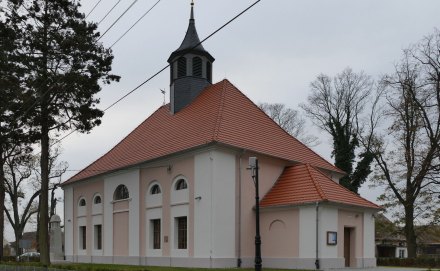
Pierwszym przystaniem na szlaku jest kościół w Kurzniach. Budowę świątyni ukończono w 1813 roku i stoi ona do dziś. Jest to kościół salowy z dwoma aneksami oraz wysokim dachem z niewielką dzwonnicą. Pięcioosiowe fasady ożywiają okna w górnej kondygnacji zamknięte łukiem pełnym, później stanowiącym jeden z wyróżników stylu schinklowskiego. W latach 2018-2021 wykonano prace konserwatorskie przywracające XIX-wieczny wygląd kościoła. Choć Schinkel nie był jego głównym wykonawcą, to w projekcie uwzględniono jego liczne uwagi.
Drugim przystankiem jest kościół w Starych Siołkowicach. Wybudowano go w latach 1825-1830 według koncepcji zatwierdzonej przez Schinkla kierującego wówczas berlińską Wyższą Deputacją Budowlaną. Z zespołem pod kierunkiem tego architekta związany był również wystrój kościoła. Wśród rysunków zachowanych w zbiorach dawnego Muzeum Schinkla znajduje się szkic szafy organowej z ok. 1826 roku. Także tutaj w ostatnich latach przeprowadzono prace rekonstrukcyjne, aby przywrócić dawny charakter wnętrza. Zrekonstruowano ołtarze i ambonę z zastosowaniem zachowanych oryginalnych elementów oraz wykonano nawiązujące do dawnych dekoracje kasetonowego stropu oraz prospektu organowego.