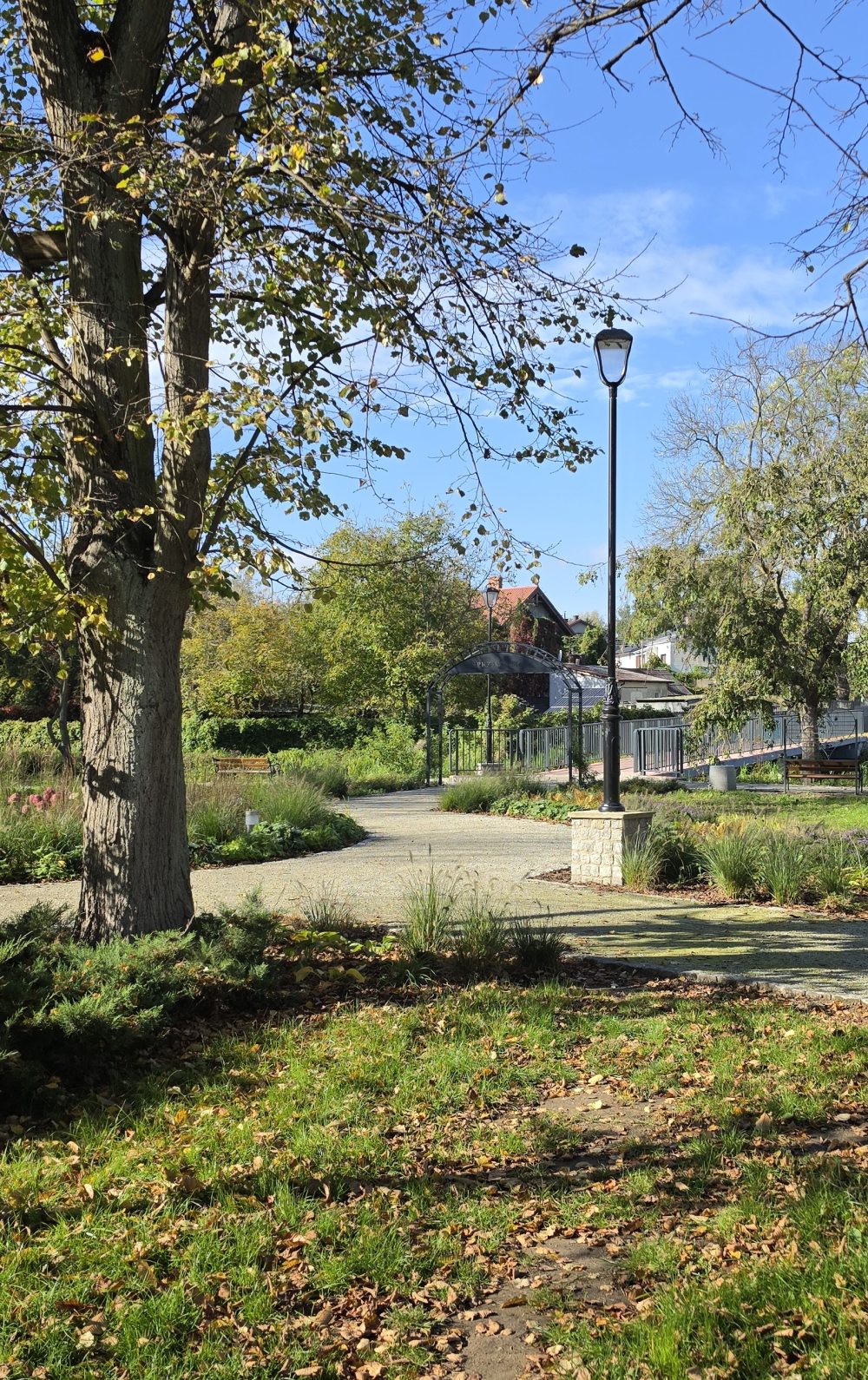
The collection of the Society of Friends of the Przasnysz Region reportedly even included a strangely shaped stone from that pagan temple… After the Third Partition of Poland, when Przasnysz fell under Prussian rule, a brick house for the general was built near what is now the park. Today, it houses a bank. And when Poland regained its independence in 1918, a Sports House was built next to the church. The foundation stone was laid in 1930 by President Ignacy Mościcki himself. Today, the building houses the Municipal Cultural Center... As you stroll along the park paths, you will come across many monuments that tell successive chapters of the town's history. In 1966, to mark the Millennium of the Polish State, a monument was unveiled in the park; it was created by Edmund Majkowski, a sculptor from Przasnysz and an honorary citizen of our town. It features a bas-relief depicting the death of Olaf Tryggvason, King of Norway, during the naval Battle of Svolder in the year 1000, fought against Swedish, Danish, and Polish forces led by Bolesław the Brave. People looking at this monument often ask whether the Baltic Sea really reached as far as Przasnysz back then.
Tadeusz Kościuszko Municipal Park
Much water has flowed down the Węgierka River since the days of the Sacred Grove… According to legend, a temple dedicated to Svarozhich did indeed stand there. Then, in the thirteenth century, a church dedicated to the Holy Spirit was erected on the site of the old pagan temple. In the centuries that followed, a cemetery was situated around it.
How it working
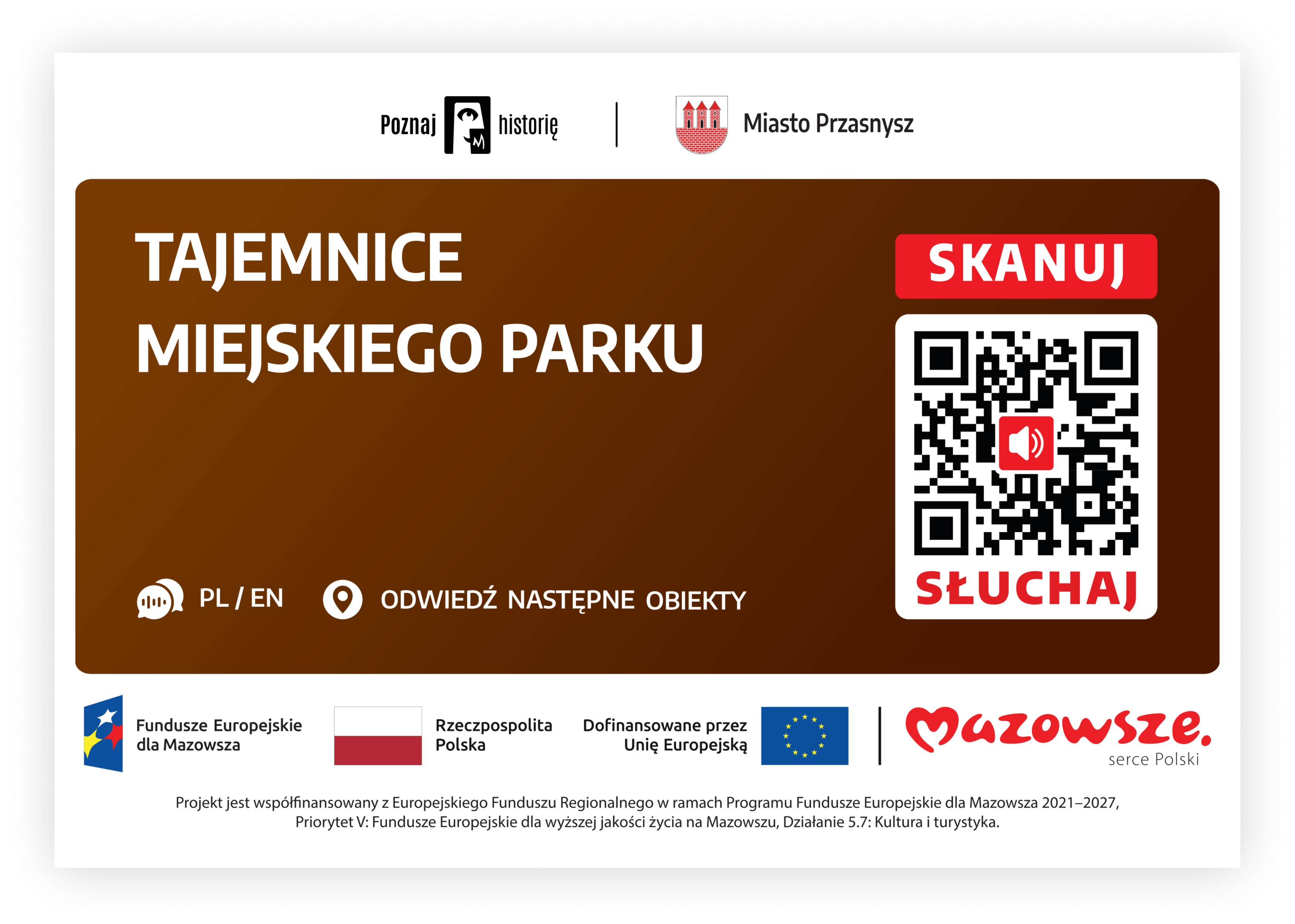
To listen to the history of monuments as part of the "Discover History" project, you need to follow a few simple steps. Below, we present a short, step-by-step "user manual" to provide a relatively simple way to access the mini-auditions.
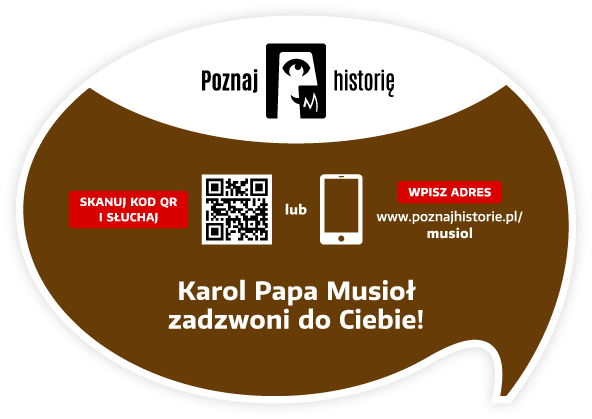
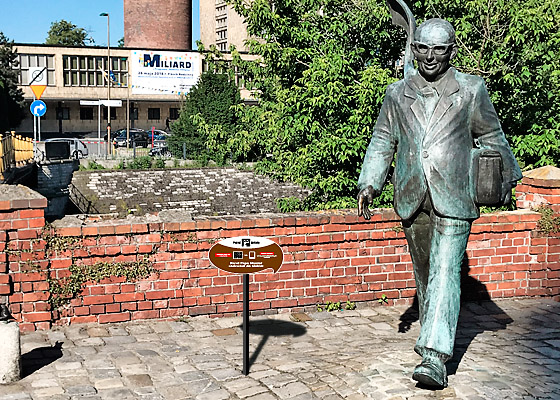
You need a smartphone with a camera. The camera lens should be pointed at the information plaque located next to the monument. Below is a view of the plaque itself and its example location next to the Karol Musioł monument in Opole.
After pointing your smartphone's camera at the QR code located on the right side of the plaque, the app's welcome screen will appear, followed by a screen with the name, photo of the monument, and the "START" button.
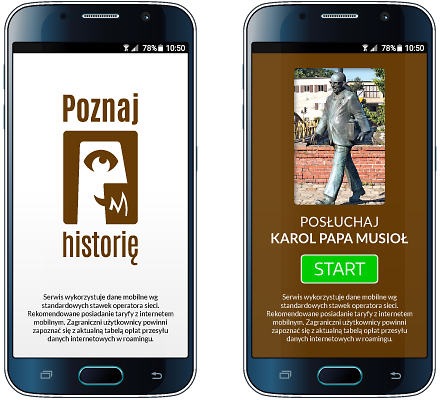
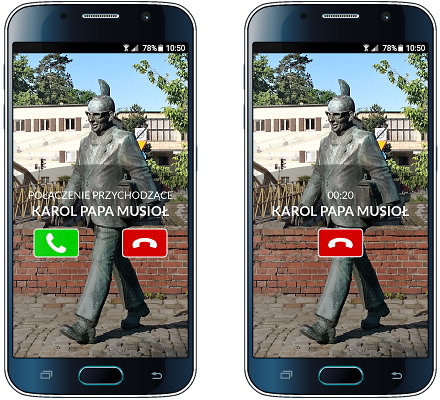
The "START" button starts the audio recording process.
Your smartphone will prompt you with the next steps after you listen to the story or pause it. Please keep an eye on your smartphone screen!
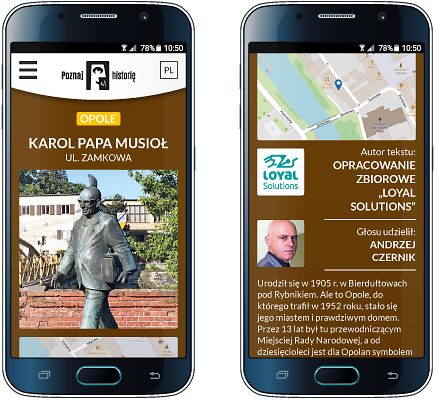
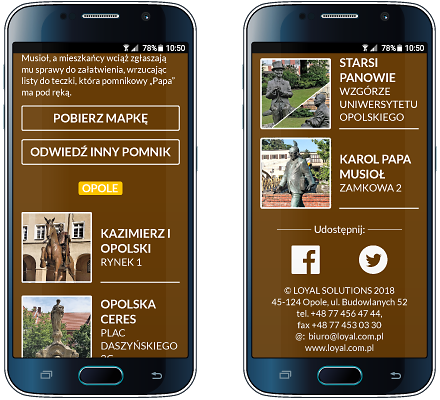
Other available options: brief information about the monument, author of the text and recording, list of other monuments in the city included in the "Discover History" project, downloadable map of monuments, video, and social media links
Would you like to implement the project in your city as well?
ContactSelect an object
View gallery
Monuments in cities remind us of the history of places and people, and allude to important events. They are also works of art. Bronze, metal, wood, or concrete transformed into the form of a monumental obelisk attract attention. We enjoy sitting by them, taking photos, and making appointments.
Project partners
Implementing the "Discover history" project in each city requires the involvement of many people: programmers, graphic designers, writers, actors, sound engineers, and coordinators. It is thanks to them that this project came to life.
Our ambition is to continually expand its reach. Therefore, we thank our current partners and invite additional cities, institutions, companies, and individuals to collaborate!

Would you like to become our Partner of the project or monument?
ContactContact
Are you interested in implementing the project in your city? Want to learn more? Want to learn more? Write to us, call us! We'll contact you and arrange a meeting. We'll prepare materials and a proposal for you.

QR Communication Sp. z o.o.
tel. +48 735 147 911
tel. +48 606 881 118
paulina.panusch@poznajhistorie.pl
kontakt@poznajhistorie.pl
Visit Social media:
Share Social media: