The Wang Church

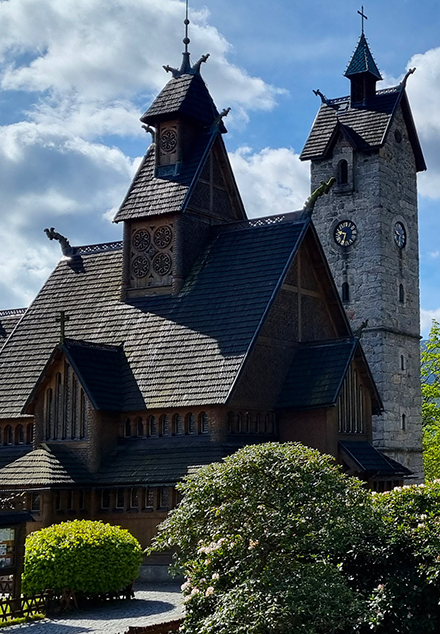
As we walk near the entrance door of the little church, let us now transport ourselves in imagination to distant Scandinavia. It is the year 1030…

The then ruler of the Norwegians, Olaf II Haraldsson, abolishes paganism in the country, replacing it with the faith in the one God of the Holy Trinity. After this event, between the eleventh and thirteenth centuries, wooden churches are built in Norway, combining features of traditional pagan Scandinavian temples with early Christian Romanesque architecture.

These are post-and-frame constructions, the so-called stavkirke. The material used comes from the core wood of hard Scandinavian pines. No nails were used; the durability of the structure relied on juniper pegs and wooden joints. The descendants of the Vikings, who had contacts with many cultures, decorated the temples, combining their own traditions with Romanesque, Byzantine, and even Saracen and Persian influences. More than five centuries later, in 1840, the Evangelical parish council of Wang on Lake Wangsmusen in southern Norway decided to sell the deteriorating church and thus obtain funds for building a new one. Johan Christian Dahl, a Norwegian lecturer at the Academy of Fine Arts in Dresden, succeeded in persuading the King of Prussia to purchase it.

Thus, in the summer of 1841, all usable elements were packed into enormous crates and shipped by water to the port of Stettin. According to accounts, the ship carrying the Wang Church miraculously escaped sinking during a violent storm that caught it while passing through the Danish straits. The magnificent work of Scandinavian carpenters and woodcarvers eventually found its way to the Old Museum in Berlin. It was intended to be reconstructed in the city gardens on Peacock Island, but then another turning point in its history occurred. Now let us return to the sculpture of Lazarus and turn right. After several dozen metres, we will stand before a Neoclassical epitaph.

The Wang Church
The Wang Church

Visit Social media:

Share Social media:

How it working

To listen to the history of monuments as part of the "Discover History" project, you need to follow a few simple steps. Below, we present a short, step-by-step "user manual" to provide a relatively simple way to access the mini-auditions.

STEP 1

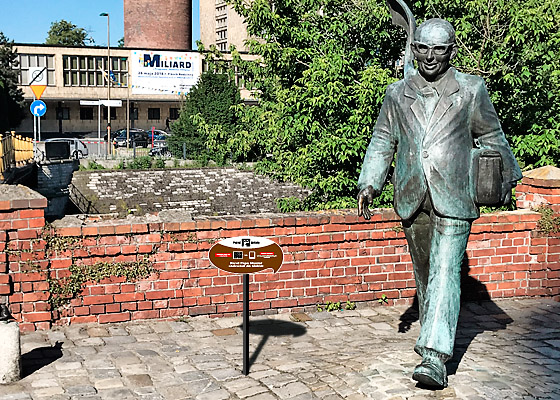
You need a smartphone with a camera. The camera lens should be pointed at the information plaque located next to the monument. Below is a view of the plaque itself and its example location next to the Karol Musioł monument in Opole.

STEP 2

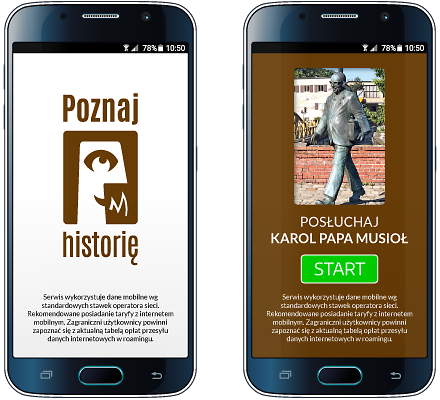
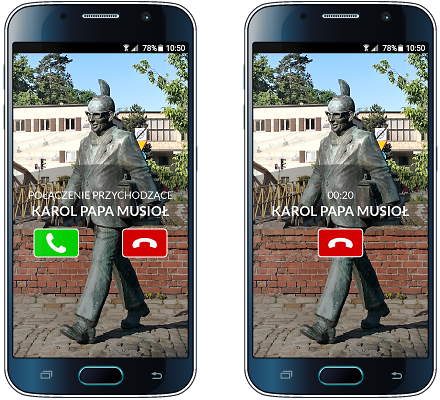
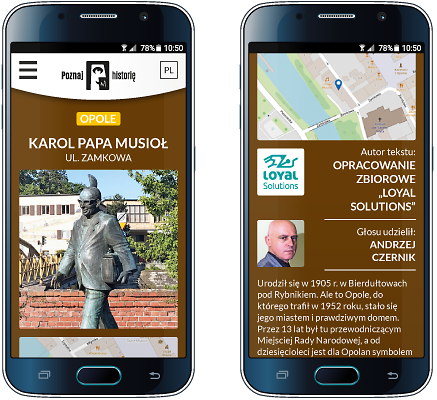
After pointing your smartphone's camera at the QR code located on the right side of the plaque, the app's welcome screen will appear, followed by a screen with the name, photo of the monument, and the "START" button.

STEP 3

The "START" button starts the audio recording process.
Your smartphone will prompt you with the next steps after you listen to the story or pause it. Please keep an eye on your smartphone screen!

STEP 4

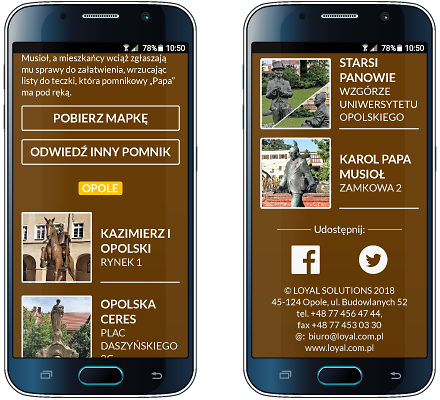
Other available options: brief information about the monument, author of the text and recording, list of other monuments in the city included in the "Discover History" project, downloadable map of monuments, video, and social media links


Would you like to implement the project in your city as well?

Contact

Project partners

Implementing the "Discover history" project in each city requires the involvement of many people: programmers, graphic designers, writers, actors, sound engineers, and coordinators. It is thanks to them that this project came to life.

Our ambition is to continually expand its reach. Therefore, we thank our current partners and invite additional cities, institutions, companies, and individuals to collaborate!


Would you like to become our Partner of the project or monument?

Contact

Contact

Are you interested in implementing the project in your city? Want to learn more? Want to learn more? Write to us, call us! We'll contact you and arrange a meeting. We'll prepare materials and a proposal for you.