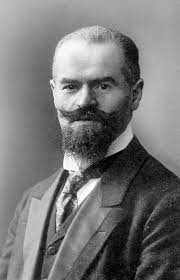
Landsberg started as a court referendary in Ostrów and Poznań, then he was an attorney in Magdeburg. There, in 1912, he became an MP of the SPD, i.e. the Socialist Party of Germany. A few years later, Private MP Landsberg became a member of the party board.
And here he showed how progressive he was. His postulates would be good even today, although more than a hundred years have passed since then. Well, see, he opposed any radicalism, he wanted to solve problems by parliamentary methods. He tried to democratize the ossified German law and introduce proportional electoral law. Last but not least, he was a staunch supporter of women's right to vote, which was achieved immediately after the war in 1918.
The end of the war was a breakthrough for Landsberg. After the emperor's abdication, he took over power with the six-person so-called Council of People's Plenipotentiaries. Not bad for a modest referendary from Rybnik, right? And this is not the end of his great career. A year later, in the first democratically elected government, Otto Landsberg became Minister of Justice.
He was involved in great politics almost until the beginning of World War II. Unfortunately, for his open opposition to the Nazis, he was deprived of his citizenship and had to flee to the Netherlands. Thus, he never returned to a country that became a contradiction of all his ideals.
Otto Landsberg
He was incorruptible and always stood by his opinion. He made his objection very clear. If something didn't go his way, he could ostentatiously leave the meeting room. Or stay in it even though all members of his party have gone outside. That he was later harassed by it was of little concern to him. The good of the country was the most important thing.
How it working
To listen to the history of monuments as part of the "Discover History" project, you need to follow a few simple steps. Below, we present a short, step-by-step "user manual" to provide a relatively simple way to access the mini-auditions.
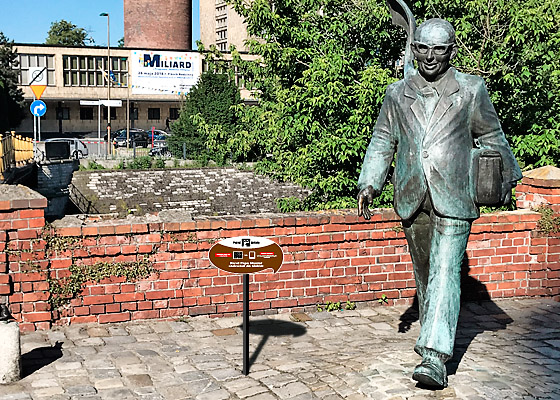
You need a smartphone with a camera. The camera lens should be pointed at the information plaque located next to the monument. Below is a view of the plaque itself and its example location next to the Karol Musioł monument in Opole.
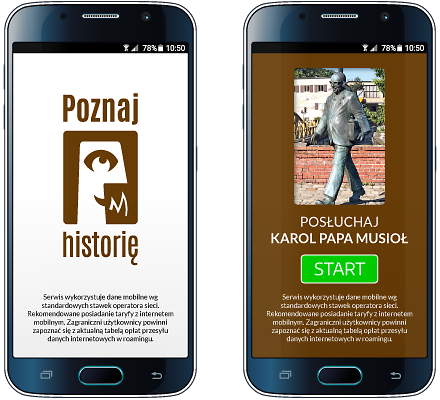
After pointing your smartphone's camera at the QR code located on the right side of the plaque, the app's welcome screen will appear, followed by a screen with the name, photo of the monument, and the "START" button.
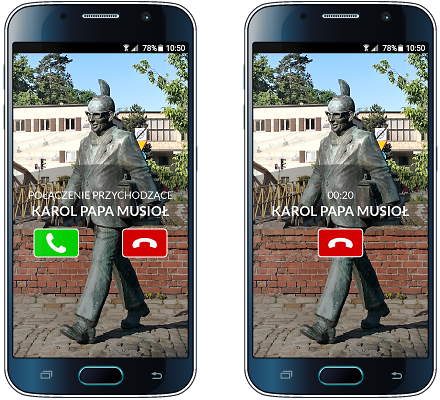
The "START" button starts the audio recording process.
Your smartphone will prompt you with the next steps after you listen to the story or pause it. Please keep an eye on your smartphone screen!
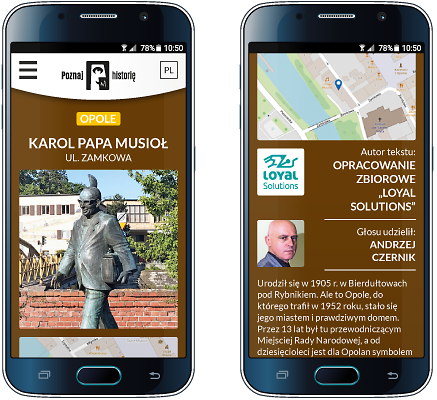
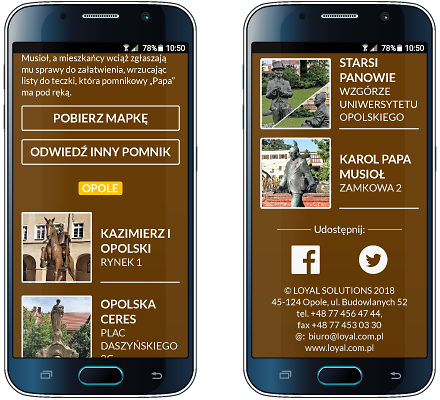
Other available options: brief information about the monument, author of the text and recording, list of other monuments in the city included in the "Discover History" project, downloadable map of monuments, video, and social media links
Would you like to implement the project in your city as well?
ContactSelect an object
View gallery
Monuments in cities remind us of the history of places and people, and allude to important events. They are also works of art. Bronze, metal, wood, or concrete transformed into the form of a monumental obelisk attract attention. We enjoy sitting by them, taking photos, and making appointments.
Project partners
Implementing the "Discover history" project in each city requires the involvement of many people: programmers, graphic designers, writers, actors, sound engineers, and coordinators. It is thanks to them that this project came to life.
Our ambition is to continually expand its reach. Therefore, we thank our current partners and invite additional cities, institutions, companies, and individuals to collaborate!

Visit Social media:
Share Social media: