It undoubtedly has Romanesque features, but its Gothic slenderness also catches the eye. For some it is a late Romanesque portal, according to others - an early Gothic portal. It is currently a side entrance leading to the cathedral from the south. It is also a kind of time gate from the distant past.
To see this portal you must first go through the massive door of the porch, or vestibule. Outside the cathedral, above the door, there is a tympanum, designed by the Opole artist Adolf Panitz, also the author of the main door of the cathedral. The tympanum depicts the Mother of God with the Child and Pope John Paul II, who in 1983 crowned the image of Our Lady of Opole, famous for his favors, in the cathedral.
The southern porch, i.e. the vestibule leading through the portal to the cathedral, is topped with a cross-barrel vault based on two oval pillars.
It is worth noting the clear, quite irregular, gouging along the portal. According to the researchers, they are the work of former knights, who sometimes, as part of the penance recommended by the clergy, had to renounce their fencing for some time. As a sign of repentance, they reportedly exterminated their swords on a sand portal, carving those lines in it. It was a symbol of being defenseless and not daring to attack anyone, doing God's will.
Gothic stone portal
The portal made of sandstone is one of the elements of the temple showing the changes in architectural styles that have imprinted on the walls of the Opole cathedral temple.


How it working
To listen to the history of monuments as part of the "Discover History" project, you need to follow a few simple steps. Below, we present a short, step-by-step "user manual" to provide a relatively simple way to access the mini-auditions.
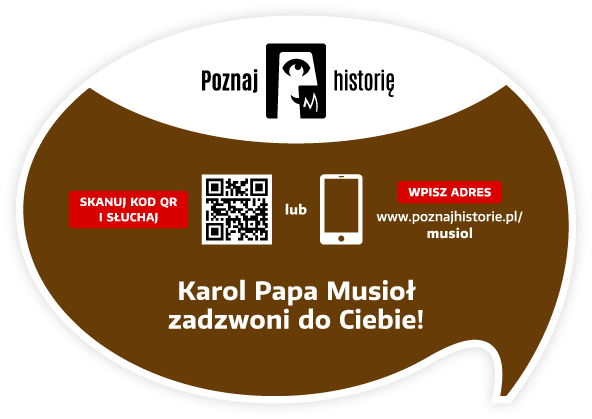
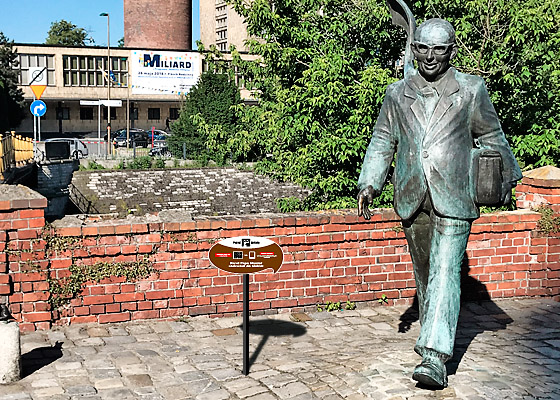
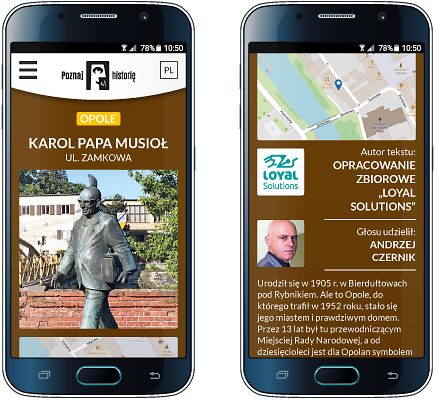
You need a smartphone with a camera. The camera lens should be pointed at the information plaque located next to the monument. Below is a view of the plaque itself and its example location next to the Karol Musioł monument in Opole.
After pointing your smartphone's camera at the QR code located on the right side of the plaque, the app's welcome screen will appear, followed by a screen with the name, photo of the monument, and the "START" button.
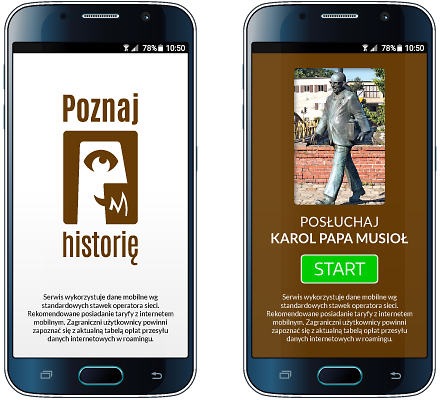
The "START" button starts the audio recording process.
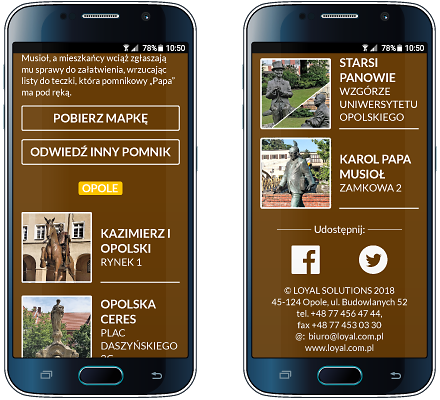
Your smartphone will prompt you with the next steps after you listen to the story or pause it. Please keep an eye on your smartphone screen!
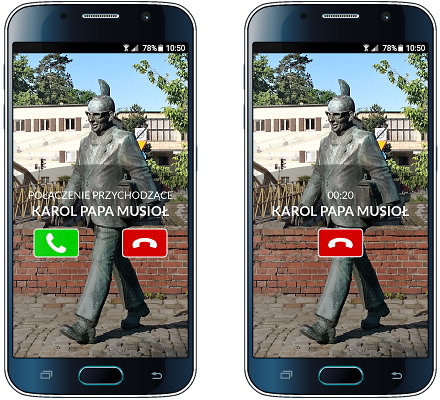
Other available options: brief information about the monument, author of the text and recording, list of other monuments in the city included in the "Discover History" project, downloadable map of monuments, video, and social media links
Would you like to implement the project in your city as well?
ContactSelect an object
View gallery
Monuments in cities remind us of the history of places and people, and allude to important events. They are also works of art. Bronze, metal, wood, or concrete transformed into the form of a monumental obelisk attract attention. We enjoy sitting by them, taking photos, and making appointments.
Project partners
Implementing the "Discover history" project in each city requires the involvement of many people: programmers, graphic designers, writers, actors, sound engineers, and coordinators. It is thanks to them that this project came to life.
Our ambition is to continually expand its reach. Therefore, we thank our current partners and invite additional cities, institutions, companies, and individuals to collaborate!

Would you like to become our Partner of the project or monument?
ContactContact
Are you interested in implementing the project in your city? Want to learn more? Want to learn more? Write to us, call us! We'll contact you and arrange a meeting. We'll prepare materials and a proposal for you.

QR Communication Sp. z o.o.
tel. +48 735 147 911
tel. +48 606 881 118
paulina.panusch@poznajhistorie.pl
kontakt@poznajhistorie.pl
Visit Social media:
Share Social media: