This was often the fate of the daughters of rulers in the past ages. Either they were married off to forge political and military alliances, or they were given to a monastery. According to many, the latter route was not worse at all. In this way, princesses avoided unwanted marriages, gained independence, peace and certain privileges. Often, like Beatrice, they became abbots. In the later years of the Order of Poor Clares in Strzelin, there were at least six abbots from Piast dynasty.
The Poor Clares from Strzelin turned out to be extremely resourceful. They collected and disposed of considerable goods. They had seven mills, two farms, two fish ponds, a large vegetable garden and twelve villages. The inhabitants of these villages did not pay tributes on the basis of serfdom, but functioned according to a rent agreement, which was more favorable not only for the sisters, but also for themselves. In this way, the nuns made a lot of money.
And it was so until 1540. Then the monastery in Strzelin was liquidated, the Poor Clares were transferred to the congregation in Wrocław, and considerable property was taken over by the Dukes of Brzeg. The deserted building was destroyed in a fire in the town, first in 1548, and then during the Thirty Years' War in the 17th century. In the meantime, provisionally secured, it served as the town's granary.
At the turn of the nineteenth and twentieth centuries, the centuries-old monastery traditions in Strzelin were continued by the congregation of the Borromean Sisters. And after World War II, the Church of the Exaltation of the Holy Cross, which was built in the 15th century at the convent of Poor Clares, was taken over by Catholic priests along with the church building. They were rebuilt in 1955-1956. Today you can admire the baroque interior of the temple with sculptures and paintings by Jan Józef Klima from the 18th century.
POOR CLARES NUN
The monastery of the Poor Clares in Strzelin was established in 1295. Its founder was Duke Bolko I, the Strict, also known as of Świdnik. The same who granted Strzelin city rights in 1292. The duke brought here a group of nun from Wrocław to begin with. The first abbess of the monastery was prince's daughter Beatrice. In the order, she took the name Anna.


How it working
To listen to the history of monuments as part of the "Discover History" project, you need to follow a few simple steps. Below, we present a short, step-by-step "user manual" to provide a relatively simple way to access the mini-auditions.
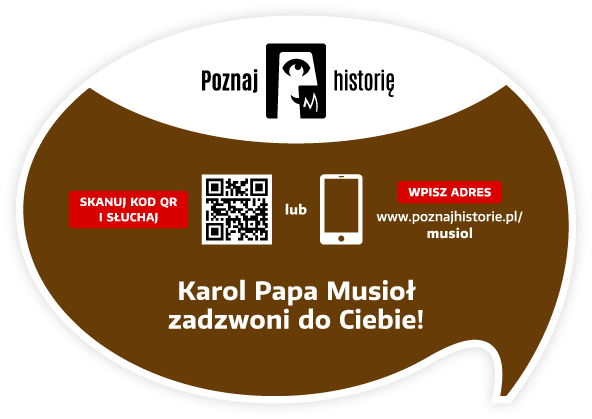
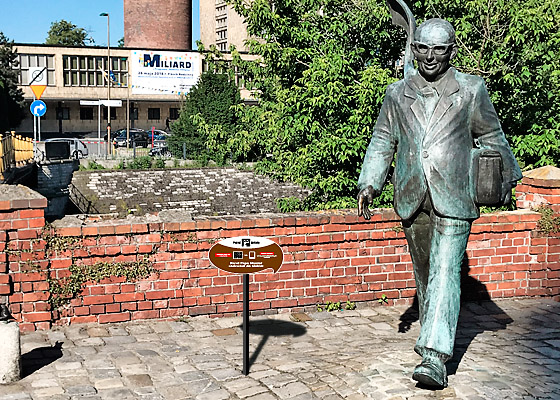
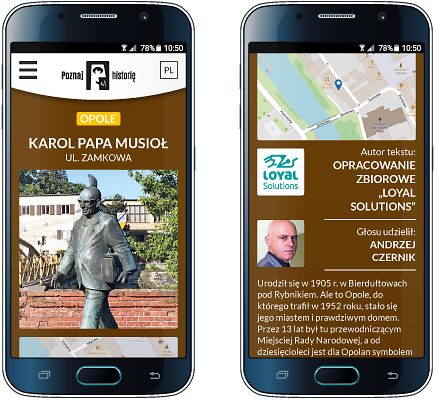
You need a smartphone with a camera. The camera lens should be pointed at the information plaque located next to the monument. Below is a view of the plaque itself and its example location next to the Karol Musioł monument in Opole.
After pointing your smartphone's camera at the QR code located on the right side of the plaque, the app's welcome screen will appear, followed by a screen with the name, photo of the monument, and the "START" button.
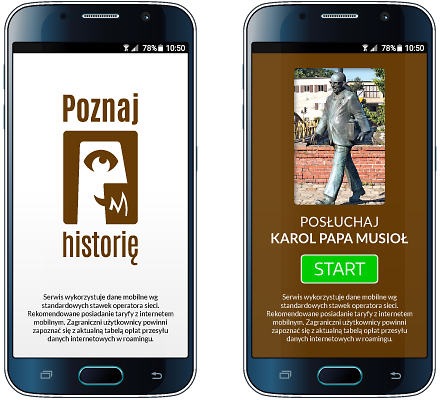
The "START" button starts the audio recording process.
Your smartphone will prompt you with the next steps after you listen to the story or pause it. Please keep an eye on your smartphone screen!
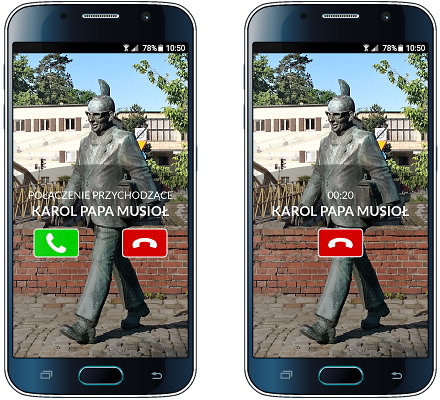
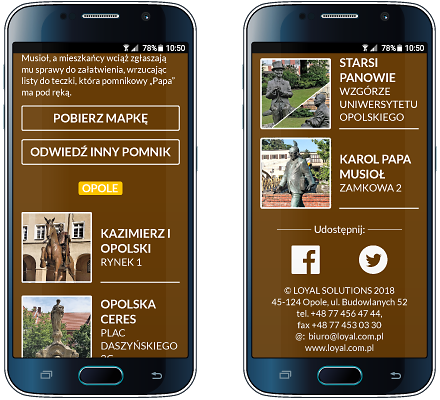
Other available options: brief information about the monument, author of the text and recording, list of other monuments in the city included in the "Discover History" project, downloadable map of monuments, video, and social media links
Would you like to implement the project in your city as well?
ContactView gallery
Monuments in cities remind us of the history of places and people, and allude to important events. They are also works of art. Bronze, metal, wood, or concrete transformed into the form of a monumental obelisk attract attention. We enjoy sitting by them, taking photos, and making appointments.
Project partners
Implementing the "Discover history" project in each city requires the involvement of many people: programmers, graphic designers, writers, actors, sound engineers, and coordinators. It is thanks to them that this project came to life.
Our ambition is to continually expand its reach. Therefore, we thank our current partners and invite additional cities, institutions, companies, and individuals to collaborate!

Would you like to become our Partner of the project or monument?
ContactContact
Are you interested in implementing the project in your city? Want to learn more? Want to learn more? Write to us, call us! We'll contact you and arrange a meeting. We'll prepare materials and a proposal for you.

QR Communication Sp. z o.o.
tel. +48 735 147 911
tel. +48 606 881 118
paulina.panusch@poznajhistorie.pl
kontakt@poznajhistorie.pl
Visit Social media:
Share Social media: