The present, gothic shape is over 500 years old. But it was built on the site where a wooden building from the mid-13th century used to stand. The local cellars have impressive, stellar vaults. This is one of those things that were created here during the reconstruction in the 15th century. The whole town hall was then demolished and a new, two-story body was erected on the old foundations. An additional entrance to the basement was created in the northern part of the eastern wall, arcades were built, and a two-nave hall and a hall with a wooden staircase were separated on the ground floor. But the most striking novelties appeared in the facade. It was decorated with dense, pointed windows and blendes, richly ornamented gables and multi-colored stripes of glazed bricks. The newly arranged town hall in Szczecin, from 5 to 13 December 1570, was the venue for the Peace Congress ending the Swedish-Danish war.
A trip around it is like a journey back in time - the exhibits are arranged in such a way that the higher we go, the more recent history we will learn. Permanent exhibitions are devoted to the history and culture of the city, and there is a restaurant in the gothic cellar with stellar vaults. It is worth adding that our town hall is also part of the international tourist route called the European Route of Brick Gothic.
Old Town hall
Altes RathausToday it houses the Museum of the History of Szczecin. From the end of the thirteenth to the end of the nineteenth century, there was a town hall, a department store, a court and a prison. In 1937, its renovation began, the restored one was to serve the city. Unfortunately, the work stopped working. The town hall was rebuilt in the Gothic style in 1972-1975.


How it working
To listen to the history of monuments as part of the "Discover History" project, you need to follow a few simple steps. Below, we present a short, step-by-step "user manual" to provide a relatively simple way to access the mini-auditions.
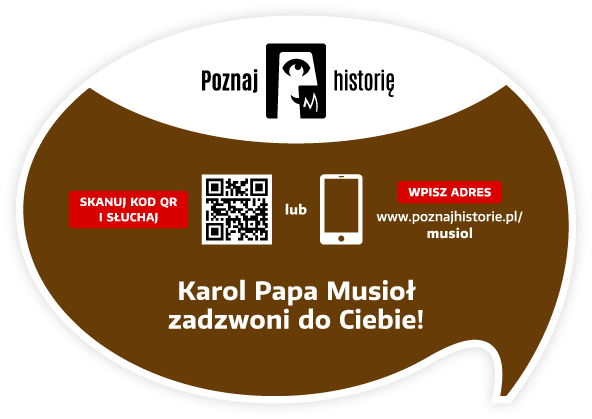
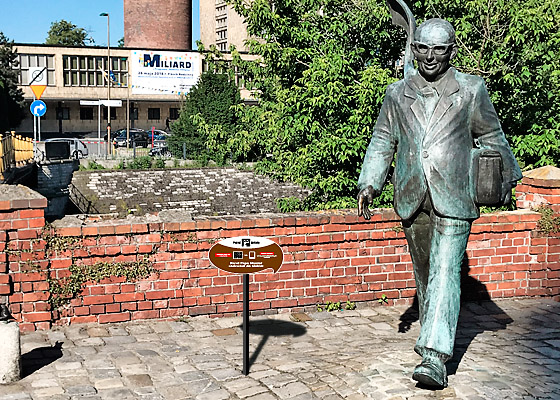
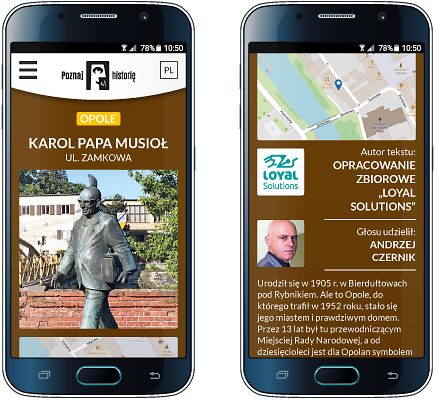
You need a smartphone with a camera. The camera lens should be pointed at the information plaque located next to the monument. Below is a view of the plaque itself and its example location next to the Karol Musioł monument in Opole.
After pointing your smartphone's camera at the QR code located on the right side of the plaque, the app's welcome screen will appear, followed by a screen with the name, photo of the monument, and the "START" button.
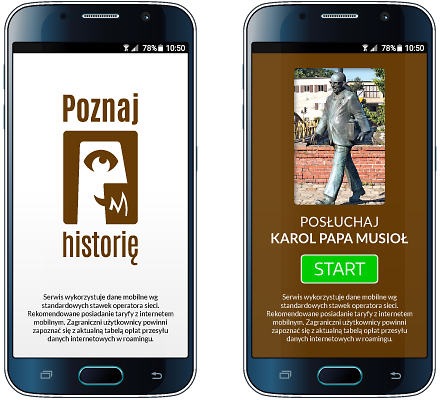
The "START" button starts the audio recording process.
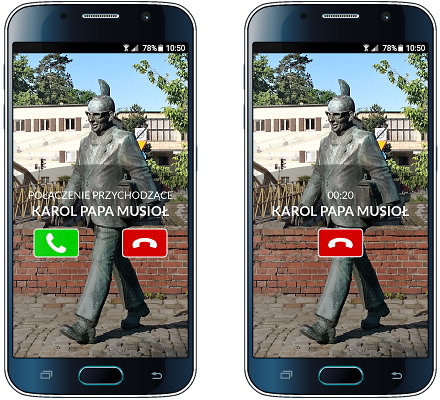
Your smartphone will prompt you with the next steps after you listen to the story or pause it. Please keep an eye on your smartphone screen!
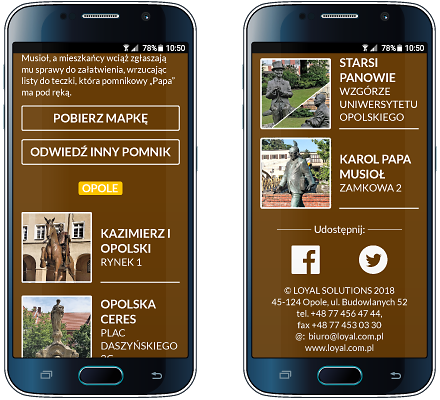
Other available options: brief information about the monument, author of the text and recording, list of other monuments in the city included in the "Discover History" project, downloadable map of monuments, video, and social media links
Would you like to implement the project in your city as well?
ContactView gallery
Monuments in cities remind us of the history of places and people, and allude to important events. They are also works of art. Bronze, metal, wood, or concrete transformed into the form of a monumental obelisk attract attention. We enjoy sitting by them, taking photos, and making appointments.
Contact
Are you interested in implementing the project in your city? Want to learn more? Want to learn more? Write to us, call us! We'll contact you and arrange a meeting. We'll prepare materials and a proposal for you.

QR Communication Sp. z o.o.
tel. +48 735 147 911
tel. +48 606 881 118
paulina.panusch@poznajhistorie.pl
kontakt@poznajhistorie.pl
Visit Social media:
Share Social media: