The main building is the church of st. Józef the Bridegroom, which is surrounded on all sides by the monastery buildings. The present church was built in the years 1638-1644. Work on finishing and furnishing the temple and its surroundings lasted much longer, almost until the end of the 18th century. The interior of the church contains rococo furnishings and a baroque epitaph of Mikołaj Tarnowiecki. The polychromes come from 1745 and the vault of the nave was decorated with frescoes by the Głogów painter Ernest Engelfeldner. The rest of the painting works were done by Bernardine brothers sent from Poznań - Walenty Żebrowski and Liberiusz Staniszewski. The present main altar is somewhat from 1746. It contains the painting "The Descent from the Cross", funded by Ludwik Krzycki. It is a copy of Rubens' work.
It is also worth seeing the burial crypt under the chapel of St. Cross. They were built in 1731. The first one buried under the chapel was the brewer Mateusz in 1732. The monks were buried in this place only two years later. By the end of the 18th century, about 60 dead were buried in the crypt.
The monastery complex, headed by the church, makes a great impression on tourists visiting Wschowa. No wonder that it is considered a gem of Wschowa's monuments.
Monastery complex
The complex itself, apart from the monastery, also includes the church, the farm part and the monastery garden. It is a veritable mixture of late Renaissance styles, combining forms referring to Gothic traditions, and interiors in the spirit of Rococo.


How it working
To listen to the history of monuments as part of the "Discover History" project, you need to follow a few simple steps. Below, we present a short, step-by-step "user manual" to provide a relatively simple way to access the mini-auditions.
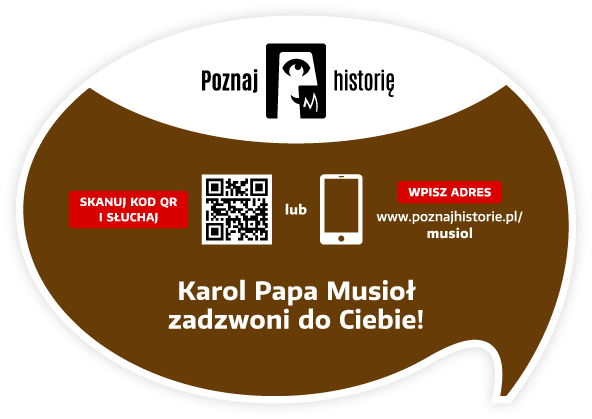
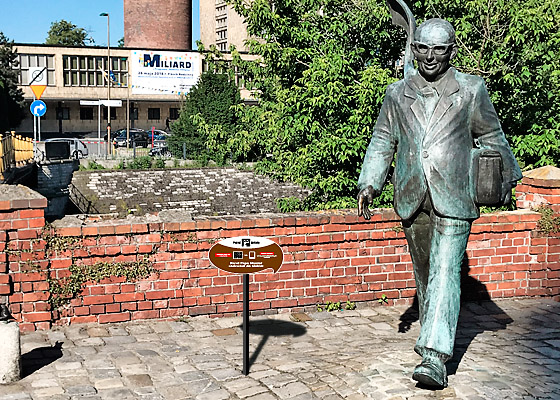
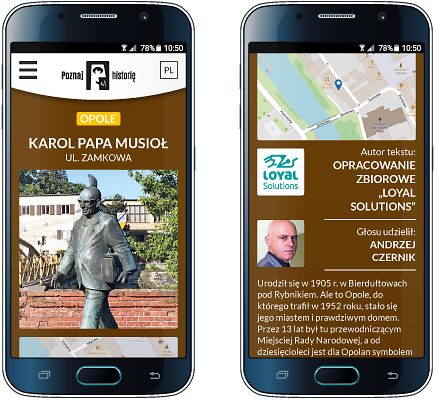
You need a smartphone with a camera. The camera lens should be pointed at the information plaque located next to the monument. Below is a view of the plaque itself and its example location next to the Karol Musioł monument in Opole.
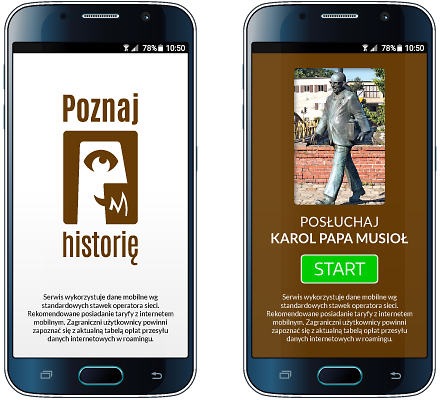
After pointing your smartphone's camera at the QR code located on the right side of the plaque, the app's welcome screen will appear, followed by a screen with the name, photo of the monument, and the "START" button.
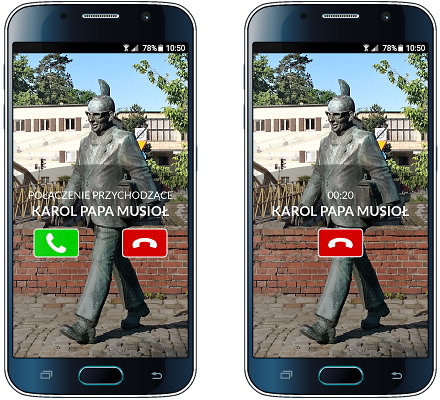
The "START" button starts the audio recording process.
Your smartphone will prompt you with the next steps after you listen to the story or pause it. Please keep an eye on your smartphone screen!
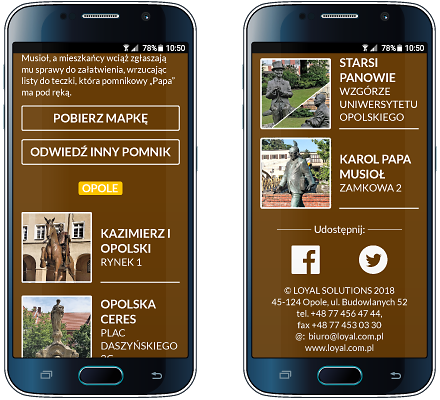
Other available options: brief information about the monument, author of the text and recording, list of other monuments in the city included in the "Discover History" project, downloadable map of monuments, video, and social media links
Would you like to implement the project in your city as well?
ContactSelect an object
View gallery
Monuments in cities remind us of the history of places and people, and allude to important events. They are also works of art. Bronze, metal, wood, or concrete transformed into the form of a monumental obelisk attract attention. We enjoy sitting by them, taking photos, and making appointments.
Project partners
Implementing the "Discover history" project in each city requires the involvement of many people: programmers, graphic designers, writers, actors, sound engineers, and coordinators. It is thanks to them that this project came to life.
Our ambition is to continually expand its reach. Therefore, we thank our current partners and invite additional cities, institutions, companies, and individuals to collaborate!

Would you like to become our Partner of the project or monument?
ContactContact
Are you interested in implementing the project in your city? Want to learn more? Want to learn more? Write to us, call us! We'll contact you and arrange a meeting. We'll prepare materials and a proposal for you.

QR Communication Sp. z o.o.
tel. +48 735 147 911
tel. +48 606 881 118
paulina.panusch@poznajhistorie.pl
kontakt@poznajhistorie.pl
Visit Social media:
Share Social media: